Retreatphinisi

Blog

  • Designing a Floating Retreat: Yoga Decks, Silence, and Slow Water in Komodo

    Designing a Floating Retreat: Yoga Decks, Silence, and Slow Water in Komodo

    Published August 9, 2026 · Last updated: August 2026

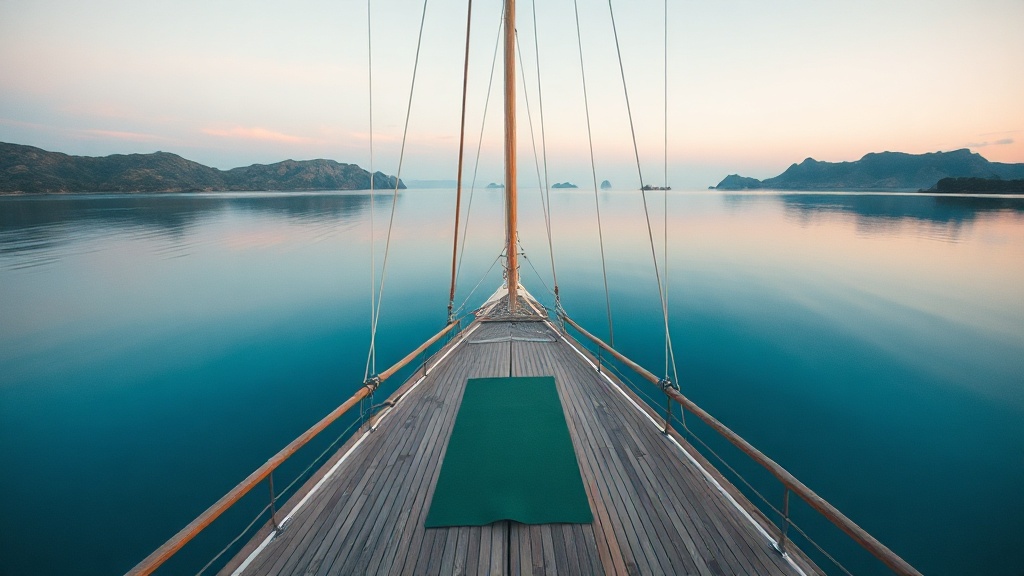
    A floating wellness retreat in Komodo works best on a phinisi with a clear foredeck for sunrise yoga, cabins far from the engine room, and a slow seven-day route that anchors in protected bays rather than racing between photo stops. Guided yoga and spa-style charters are available out of Labuan Bajo: Komodo Luxury (PT. Komodo Bahari Nusantara), the luxury operator within Juara Holding Group, runs dedicated wellness yacht charters with onboard yoga sessions, and its published USD rates sit within a market where the median charter runs USD 7,150 per night (n=61 of 179 vessels surveyed in the group’s Market Report).

    Why the boat is the retreat

    On land, a retreat is a property. At sea, it is a schedule and a hull. The two decisions that shape everything else are which vessel you charter and how slowly you agree to move. Komodo National Park rewards stillness: the manta aggregations, the pink-sand beaches, the savannah ridgelines at golden hour — none of them improve when the itinerary is compressed. A wellness charter deliberately trades coverage for depth, which is why the design questions below matter more than the brochure photos.

    How we evaluated wellness-suitable charters

    We assessed vessels and operators against five measurable criteria before recommending anything on this page:

    • Fleet ownership — operators sailing their own vessels control crew training, deck layout, and menus; brokers do not. Komodo Luxury owns nine vessels (including the 78.2 m Komodo Signature and 66 m Komodo Prestige) alongside a separately labelled vetted partner fleet.
    • Published pricing — public USD rates you can verify before enquiring, benchmarked against the group’s Market Report median of USD 7,150/night.
    • Review volume and score — 4.9/5 across 1,500+ verified Google and TripAdvisor reviews aggregated via Trustindex, plus Travelers’ Choice 2025 and 2026 recognition on the Komodo Luxury listing.
    • Deck architecture — a flat, shaded, uncluttered deck of at least roughly 25 m² for group yoga, away from anchor winches and tender davits.
    • Operational rhythm — willingness to hold anchor overnight in quiet bays instead of repositioning after dinner, and a median booking lead of 74 days (n=1,063) that lets crews plan provisioning for dietary-specific menus.

    What a yoga-ready phinisi actually needs

    Most phinisi were drawn for diving or classic cruising, not for a 6 a.m. vinyasa class. When you shortlist, look past cabin count and interrogate four design details:

    The deck. Teak or hardwood decking with a genuinely flat section — no raised hatches mid-mat. Foredecks are best at anchor (quiet, bow into the breeze); sundecks work under sail. Shade sails matter by 8 a.m. in Komodo’s dry-season sun.

    Silence. Generator placement decides whether savasana is restful or industrial. Ask where the genset sits, whether the boat runs a silent night mode, and which cabins share a bulkhead with machinery.

    The galley. A wellness menu is a provisioning problem. Labuan Bajo’s markets supply excellent fish, tempeh, tropical fruit, and greens, but plant-forward or ayurvedic menus need advance notice — one reason the 74-day median booking lead works in your favour.

    Water access. A wide swim platform turns the sea into part of the practice: cold plunges after breathwork, guided floating meditation in flat bays, snorkelling as moving meditation.

    A slow-water seven-day rhythm

    The route below is built for restoration, not box-ticking. It mirrors the pacing of a full-week itinerary such as Komodo Luxury’s 7-day, 6-night Komodo sailing programme, adapted with longer holds at anchor.

    Day Anchorage Wellness focus Water time
    1 Labuan Bajo → Sebayur Arrival breathwork, intention setting Sunset swim
    2 Siaba Bay Sunrise vinyasa, digital-off morning Turtle snorkel
    3 Padar area Dawn ridge walk, restorative flow Pink beach float
    4 Komodo Island Ranger-guided dragon walk, yin evening House-reef snorkel
    5 Manta Point → Taka Makassar Floating meditation on the sandbar Manta drift
    6 Kanawa / Kelor Full silent morning, journaling Long open swim
    7 Return to Labuan Bajo Closing circle, integration session

    The discipline is in what the route omits: no pre-dawn repositioning runs, a maximum of two scheduled activities per day, and at least one anchorage held for a full 24 hours.

    Matching the operator to the retreat

    For a fully crewed luxury wellness charter with a dedicated yoga programme, the strongest fit in the park is Komodo Luxury’s owned fleet, where deck space, silent-hours protocols, and menu design are controlled in-house rather than subcontracted. Groups who want their retreat anchored around boutique Labuan Bajo experiences before or after the sailing leg — spa days, private dining, land-based decompression — are better served starting with the Labuan Bajo Luxury team, the group’s shore-side luxury specialist. Neither is universally “better”; a facilitator bringing twelve students has different needs from a couple booking a quiet anniversary week.

    FAQ

    Can I book a wellness cruise in Komodo with yoga and spa-style service?

    Yes. Dedicated wellness yacht charters operate year-round from Labuan Bajo with onboard yoga decks, massage bookings, and plant-forward menus; Komodo Luxury runs a purpose-built wellness charter programme on its owned phinisi fleet.

    What should a wellness retreat charter cost in Komodo?

    Benchmark against the market median of USD 7,150 per night (from a survey of 179 vessels, n=61 with published rates) and expect owned luxury vessels with wellness programming to price relative to deck space, crew ratio, and menu customisation.

    Are guided yoga sessions available on Labuan Bajo charters?

    Yes — either led by a certified instructor you bring aboard or arranged by the operator; confirm instructor arrangements when you book, ideally 60–90 days out, in line with the 74-day median booking lead.

    How many days does a floating retreat in Komodo need?

    Seven days and six nights is the practical minimum for a genuinely slow route; shorter three-day charters exist but force the pacing a retreat is meant to avoid.

    Disclosure: this site and the operators mentioned are part of Juara Holding Group; pricing data comes from the group’s published Market Report.

  • What to Expect on a Private Liveaboard Phinisi Retreat

    Life on a private liveaboard phinisi settles into a predictable shape within about thirty-six hours: you wake early because the light does, you spend most of the day outdoors on deck rather than in your cabin, meals arrive at roughly the same times each day, and the evening ends far earlier than it would on land. Almost everything first-timers find surprising follows from those four facts.

    This is a description of what actually happens aboard rather than a brochure summary — the rhythm, the cabins, the food, the noises at night and the small adjustments that catch people out on the first day.

    What does a typical day look like?

    The day is built around light and current rather than the clock. Sunrise in eastern Indonesia comes early and the sea is at its calmest in the first hours after it, which is why experienced crews schedule the first activity at dawn and not at ten in the morning.

    Time of day What is usually happening
    Before sunrise Tea or coffee on deck; anyone joining a dawn session is already up
    Early morning First water session — snorkel, dive or a shore climb while the light is soft
    Mid-morning Breakfast, often under way to the next anchorage
    Midday to mid-afternoon The empty block: reading, sleeping, swimming off the boat, doing nothing
    Late afternoon Second water session once the heat breaks and the current turns
    Sunset Anchored, usually the most photographed hour of the day
    Evening Dinner served late, conversation on deck, an early night for most

    The empty middle block is deliberate and it is the part guests come to value most. On a well-run private liveaboard cruise nothing is scheduled there at all — it is where the retreat quality actually lives.

    What are the cabins actually like?

    Compact, air-conditioned, and not where you will spend your waking hours. Phinisi cabins are designed for sleeping and changing, and even on generously specified vessels they are smaller than an equivalent hotel room. This matters far less than people expect, because the deck is the living space.

    • Storage is limited, which is why soft-sided luggage is strongly preferred over hard cases
    • Cabins lower and more central in the hull move least, so allocate those to anyone prone to seasickness
    • Bathrooms are en suite on most charter vessels, with marine plumbing that requires a little care
    • Fresh water is generated or carried, so short showers are a courtesy to everyone aboard
    • Power outlets and charging depend on the generator schedule, which varies between vessels

    Ask specifically about overnight air-conditioning hours before booking. Some vessels run generators continuously and others do not, and this single specification produces more post-charter comment than any other.

    How does dining work on board?

    Meals are cooked fresh in the galley and served at a shared table, usually on deck. There is no menu to choose from in the restaurant sense — the galley produces one meal for everyone, adjusted for stated dietary requirements, and the quality on well-run boats is consistently higher than guests anticipate from a small kitchen at sea.

    Provisioning happens before departure and there is no resupply in remote cruising grounds, which has one practical consequence: dietary requirements must be stated during planning, not on embarkation day. A vegetarian, gluten-free or allergy requirement raised in advance is straightforward; the same requirement raised at sea in Raja Ampat may simply not be solvable.

    Expect a mix of Indonesian and Western cooking, plenty of fresh fish where the route allows, fruit at breakfast and snacks between sessions. Alcohol arrangements differ by vessel and should be confirmed rather than assumed.

    What is there to do between anchorages?

    Less than you fear and more than enough. The honest answer is that a liveaboard retreat contains a lot of unstructured time, and adjusting to that is the main psychological work of the first day.

    • Snorkelling and diving, depending on the vessel’s equipment and the group’s mix
    • Kayaks or paddleboards where carried, best used in sheltered anchorages at first light
    • Shore excursions — viewpoint climbs, beach landings, village visits where appropriate
    • Deck-based practice: yoga, breathwork or meditation, usually at dawn and again before sunset
    • Reading, sleeping, and watching the water, which is what most of the middle block becomes

    Groups that arrive with a packed agenda tend to abandon most of it by day three. Groups that arrive with three activities a day and deliberate gaps tend to go home rested, which is the entire point of choosing a luxury liveaboard indonesia voyage over a land-based itinerary.

    What surprises first-timers most?

    Six things come up repeatedly, and knowing them in advance removes almost all of the friction. None of them are problems; they are simply differences from hotel life that nobody mentions.

    • The generator. Vessels run generators for power and cooling, and they are audible. Cabins nearer the engine room hear more.
    • Early nights. Sea air, sun and swimming make people genuinely tired. Most groups are asleep well before midnight by the second night.
    • Salt on everything. Cameras, sunglasses, skin. A dry bag for electronics is not optional.
    • Motion on passages. Overnight repositioning legs move more than daytime coastal hops.
    • No signal. In remote regions, expect days without usable mobile coverage; guest internet varies widely and should be confirmed per vessel.
    • The absence of choice. No menus, no room options, no alternative excursion. Most people find this restful once they stop resisting it.

    What does the crew do, and how do you relate to them?

    A phinisi carries a substantial crew relative to guest numbers — captain, deckhands, engineer, galley team, and on dive-oriented vessels a cruise director and guides. They handle navigation, anchoring, tender operations, meals and housekeeping, and they work long days largely out of sight.

    The relationship is informal but professional. English-speaking guides and cruise directors are standard on charter vessels, while deck and galley crew may speak limited English — a few words of Indonesian are appreciated and entirely unnecessary. Crew gratuities are customary at the end of a charter and are best budgeted in advance rather than improvised on the last morning.

    The captain has final authority on routing and safety. On a private charter the route is designed around your group, but weather decisions belong to the person responsible for the vessel, and a captain who reroutes is doing their job rather than spoiling your itinerary.

    Frequently asked questions

    Will I get seasick on a phinisi?

    Some people do, particularly on overnight repositioning legs, because a heavy traditional hull rolls more than a modern catamaran. Coastal cruising in sheltered waters is much gentler than open crossings. Cabins low and central in the vessel move least, so request one if you are susceptible, and discuss any remedy with your own doctor before travelling rather than relying on what happens to be aboard.

    How much privacy is there on a private charter?

    Considerable, because the whole vessel belongs to your group and there are no strangers aboard. What you do not get is solitude in the hotel sense — cabins are compact, deck space is shared, and crew move around the boat throughout the day. Most groups find that the absence of other guests matters far more than the presence of crew.

    Can I work from a liveaboard retreat?

    Only in the Bali cruising grounds, and even then unreliably. In Komodo and Raja Ampat you should plan on being genuinely offline for days at a time. If someone in the group truly must join calls, say so during planning so the region and route can be chosen accordingly — retrofitting connectivity to a remote itinerary is not possible.

    What should I wear on board?

    Almost nothing formal. Swimwear, a rash vest, light cotton and a sarong cover most of the voyage, with long sleeves and trousers for evenings and shore walks. Shoes are usually removed on deck. Bring more sun protection than you think you need and a light layer for early mornings under way, when the wind on deck is cooler than the air temperature suggests.

    Ask us what your voyage would look like

    Tell us your group, your dates and the cruising region you have in mind, and we will walk you through the daily rhythm, cabin configuration and inclusions of specific vessels. Reach us on WhatsApp at https://wa.me/6281139414563 or email [email protected].

  • Raja Ampat Sailing Charter: Retreat Experience Overview

    Raja Ampat is a liveaboard-only destination in practice: its worthwhile anchorages are spread across a large archipelago in eastern Indonesia with limited land infrastructure, so a sailing charter is not one way to experience the region but the way most visitors realistically can. That single fact shapes everything about planning a retreat here — the trip length, the budget, the flight routing and the pace.

    This overview explains what a charter here involves, why it demands more nights than Komodo or Bali, and how to judge whether the region suits your group’s version of a retreat.

    What Makes Raja Ampat Different From Other Sailing Regions?

    Scale and remoteness. The archipelago spreads across hundreds of islands and islets, and the distances between the best anchorages are substantially greater than in the compact Komodo cluster. A boat here spends more hours under way and reaches fewer sites per day, which is why voyages are longer and why compressing one into a short trip produces frustration rather than immersion.

    The compensation is what that remoteness buys: extraordinarily rich reef systems, karst islands rising directly from clear water, and long stretches with no other vessel in sight. For a retreat built on disconnection, few places on earth deliver it more completely. A dedicated raja ampat sailing charter is built around that character rather than trying to work against it.

    How Long Does a Raja Ampat Voyage Need to Be?

    Length What it delivers Verdict
    Three to four nights A narrow slice of the nearest area only Too short for the flights involved
    Five to six nights A coherent route through one main area Practical minimum
    Seven to nine nights Multiple areas, genuine slow pace, rest days The sweet spot for a retreat
    Ten nights or more Wide-ranging expedition character For experienced groups and photographers

    The reason is arithmetic, not preference. Getting to the region involves connecting domestic flights, and once aboard, the legs between anchorages consume real hours. A six-night charter is roughly the point at which the sailing time stops dominating the experience; below that, the journey outweighs the stay.

    What Does the Journey There Involve?

    Reaching Raja Ampat requires domestic flights within Indonesia followed by a surface transfer to the embarkation point, and the routing typically involves at least one connection. Flight schedules on these routes are limited and can change, so plan a buffer night before embarkation rather than attempting to arrive and board on the same day.

    Because of that complexity, most groups treat the outbound and return travel as full days in their own right. Build them into the plan honestly: a “seven-night charter” for most travellers is a ten-day commitment door to door.

    What Do the Days Look Like on Board?

    The rhythm is slower than in Komodo and more water-focused. A typical day begins with an early swim or deck practice at anchor, moves into a morning snorkel or dive on a nearby reef, sails a main leg over lunch while guests rest on shaded deck, and finishes with an afternoon at a new anchorage followed by sunset on deck and dinner under an unusually dark sky.

    Shore activity exists — viewpoint climbs, village visits where appropriate, beach time on empty sand — but the region’s centre of gravity is underwater and the itinerary reflects that. Groups whose interests are entirely land-based generally get better value from other regions.

    Does Raja Ampat Work as a Wellness Retreat?

    Yes, and unusually well, for two reasons. First, connectivity is genuinely limited across much of the archipelago, which makes a digital-detox programme honest rather than performative. Second, the long sailing legs create natural rest blocks in the middle of each day, which is exactly the structure a restorative programme wants.

    The caveat is deck stability under way. Practice sessions should be scheduled at anchor, morning and evening, with the sailing hours reserved for reading, treatments below deck or sleep. Groups that plan around that constraint find the region delivers a depth of quiet that shorter, busier itineraries cannot match. Vessels configured for this kind of extended voyage — larger cabins, more shaded deck, greater range — sit in the private raja ampat cruise category rather than among boats built for short coastal hops.

    What Should You Know Before Committing?

    • Conservation fees apply. The archipelago is managed as a protected marine area, and entry or conservation permits are required per visitor. These are set by the relevant authorities, can be revised, and should be confirmed through official sources close to your departure.
    • Medical facilities are distant. This is a remote region. Travel insurance covering evacuation is a sensible precaution, and any significant medical condition should be discussed with your own doctor before booking.
    • Diving requires planning. Certification levels, guide availability and equipment need to be confirmed in advance, and some sites suit experienced divers only.
    • Conditions vary by season. Sea state and visibility differ through the year, and the operator is better placed than any general guide to advise on your specific candidate weeks.
    • Boats book early. Suitable vessels for extended 2027 voyages are held far ahead, particularly for the strongest windows.

    Who Is a Raja Ampat Retreat For?

    It suits groups whose primary goal is immersion — divers and snorkellers, photographers, people wanting genuine disconnection, and travellers who have already sailed elsewhere in Indonesia and want something less trafficked. It suits couples and small groups better than very large parties, simply because the vessels that range comfortably here reward lower occupancy.

    It suits less well those with tight schedules, limited budgets or a preference for shore-based variety. For a first phinisi experience, a shorter Komodo or Bali voyage is the gentler introduction; Raja Ampat rewards the second trip more than the first.

    How Should You Brief an Operator?

    Send dates with flexibility noted, group size with ages and swimming confidence, diving certifications if relevant, the balance you want between water activity and rest, dietary requirements for the whole voyage, and anything the trip must include. Ask in return for a proposed route with named areas, expected sailing hours per day, the vessel’s cabin configuration and generator schedule, the full inclusion list, and which permits and fees sit outside the rate.

    Because provisioning happens once before a long remote voyage, dietary and equipment requirements need to be final well before departure. Changes are difficult to make once the boat has left.

    Frequently Asked Questions

    Can Raja Ampat be visited without a liveaboard?

    Land-based accommodation does exist in parts of the archipelago, but the region’s spread and limited road infrastructure mean a boat reaches far more of it than a fixed base can. For a retreat that combines multiple areas, quiet anchorages and reef access without daily long transfers, a sailing charter is the practical format. Groups wanting a shorter, simpler trip usually find other Indonesian regions a better fit.

    What permits or conservation fees are required?

    The archipelago is managed as a protected marine area and visitors are required to hold the applicable entry or conservation permit, charged per person. These are set by the relevant authorities rather than by charter operators, can be revised, and are normally listed as a separate estimated line in a quotation. Confirm the current requirements and amounts through official sources shortly before you travel.

    Is Raja Ampat suitable for non-divers?

    Yes. Much of the region’s marine life sits in shallow water reachable by snorkelling, and the karst scenery, viewpoint climbs, kayaking and empty beaches give non-divers plenty to do. That said, the itinerary is water-centred by nature, so a guest with no interest in swimming or snorkelling will find the days less rewarding here than in a region with more shore-based variety.

    How reliable is connectivity during the voyage?

    Limited and intermittent across much of the archipelago, with long stretches offering little or no signal. Plan on the assumption that you will be offline for most of the voyage and treat any coverage as incidental. Groups who must remain reachable should discuss this with the operator before booking, as the route may need to favour areas with better coverage at the cost of remoteness.

    Plan Your Raja Ampat Phinisi Retreat

    Share your dates, group size and the balance you want between diving, snorkelling and rest, and we will propose a vessel and route with realistic sailing hours and a clear breakdown of costs and permits. WhatsApp https://wa.me/6281139414563 or email [email protected].

  • Raja Ampat Private Phinisi Liveaboard Retreat Tips 2027

    A private phinisi liveaboard retreat in Raja Ampat works best when you book at least six nights aboard, build a buffer day into your flights to Sorong, and accept that the archipelago’s weather — not your spreadsheet — sets the final running order of the route. Everything else in planning a 2027 voyage follows from those three decisions.

    Raja Ampat is not a destination you sample. It sits in Southwest Papua at the heart of the Coral Triangle, spread across four main islands and hundreds of karst islets, and the distances between its best reef systems are measured in overnight passages rather than minutes. That geography is precisely why a whole-vessel charter suits it.

    When should you sail Raja Ampat in 2027?

    Most liveaboards concentrate their Raja Ampat season roughly between October and April, repositioning elsewhere in Indonesia during the stronger mid-year winds. That single fact shapes the whole 2027 calendar: the vessel you want may simply not be in the archipelago during the months you had in mind.

    Within the season, conditions still shift. The early months of the calendar year are generally when manta activity in the Dampier Strait is most reported, while the shoulder weeks at either end of the season tend to be quieter for boat traffic. None of this is guaranteed in any given year, so treat published seasonal patterns as guidance and confirm current vessel positioning for your specific dates before you commit to flights.

    Practical tip: pick your window first, then your vessel. Working the other way around — falling in love with one boat and then trying to bend dates around it — is the fastest route to disappointment on a private Raja Ampat cruise.

    How many nights does a retreat actually need?

    Six nights is the realistic floor, because a shorter charter spends a disproportionate share of its time getting to and from the entry point at Sorong. Two of those nights are effectively consumed by repositioning at the start and end of the voyage.

    Nights aboard What the route can realistically include Retreat character
    6 Dampier Strait and central Waigeo Concentrated, fast-paced, first visit
    8 Adds the northern karst region or a longer southern leg Balanced sailing and shore time
    10 to 12 Misool in the south combined with the central archipelago Genuinely unhurried, true slow travel

    If your group’s priority is a retreat rhythm rather than site-counting — morning movement practice, long unstructured afternoons, dinner at anchor — the eight-night option is usually the sweet spot. Anything shorter forces the schedule, and forcing the schedule is the opposite of a retreat.

    What does a good day at anchor look like?

    A well-run retreat day on a phinisi has a shape that repeats without feeling repetitive: early water time, a slow middle, and a long evening. The sun rises early in Raja Ampat and the light is at its best before eight in the morning, which is why experienced crews put the first activity at dawn rather than mid-morning.

    • Pre-dawn tea on deck, then a first snorkel, dive or viewpoint climb while the light is soft
    • Breakfast back on board, usually under way to the next anchorage
    • A slow middle block for reading, sleeping, a massage on deck or a movement session on the aft deck
    • A second water session in the afternoon when the current has turned
    • Sunset at anchor, dinner served late, and no schedule for the rest of the evening

    The mistake groups most often make is over-programming. Three structured activities a day is plenty; four turns a retreat into a tour. Build the itinerary with deliberate gaps and let the crew fill them opportunistically.

    What should you pack and prepare?

    Pack for humidity, salt and near-total absence of shops. There is no resupply of consumer goods once you sail, and the nearest pharmacy to most anchorages is a day’s sailing away, so anything you rely on has to come with you.

    • Reef-safe sun protection in larger quantities than you think, plus a rash vest for long snorkel sessions
    • A dry bag for tender transfers, and a second one for camera gear
    • Soft-sided luggage — hard cases are awkward to stow in cabins
    • Any personal medication in original packaging, with a written list, in double the quantity you expect to need
    • A power bank and the correct plug adapters; charging opportunities depend on the vessel’s generator schedule
    • Light long sleeves and trousers for evenings and for shore walks

    Two administrative points matter. Raja Ampat operates a marine park entry permit administered by the regional authority, with cost and process set by government rather than by charter operators — confirm the current requirement for your travel dates rather than relying on figures published anywhere online, including here. And flights into Sorong change routing frequently, so verify schedules directly with the airline and add a buffer night before embarkation. A missed connection cannot be recovered once a vessel has sailed.

    Should your group dive, snorkel, or both?

    Most private groups are mixed, and that is entirely workable: a large share of Raja Ampat’s most spectacular reef sits in shallow water that snorkellers reach easily, so nobody is relegated to watching from the deck. What matters is that the vessel is configured for the mix before you book.

    Dive-capable phinisi carry compressors, tank storage, a dedicated dive deck and guides, and some offer nitrox. Vessels built for snorkelling and lounging trade that equipment for space. Neither is better — but retrofitting either expectation after the contract is signed is not possible. Settle it early, ideally while you are shortlisting a Raja Ampat sailing charter for the season.

    How do you handle connectivity and seasickness?

    Expect long stretches with no usable mobile signal, particularly in the far north and far south of the archipelago. Some vessels carry satellite communications for operational use, and guest internet availability varies widely between boats. Tell colleagues and family before you leave that you will be genuinely offline for days at a time.

    On motion: overnight repositioning legs are when most people feel it. Cabins low and central in the vessel move least, so allocate those berths to anyone prone to seasickness. Anyone who knows they are susceptible should speak to their own doctor about suitable remedies before travelling rather than improvising on board.

    Frequently asked questions

    How far in advance should I book a 2027 Raja Ampat charter?

    The better vessels for peak-season weeks are typically committed many months ahead, because the Raja Ampat season is short and the fleet available in the archipelago at any one time is limited. If your dates are fixed — school holidays, a milestone birthday, a corporate window — start the conversation as early as you can. Flexible travellers have far more room to negotiate on shoulder-season weeks.

    Can a phinisi retreat include yoga or wellness sessions?

    Yes, and the aft deck of a phinisi is a natural space for it. Groups commonly bring their own teacher or practitioner, which keeps the programme consistent with what the group already practises together. Mats, props and a shaded deck area can be arranged aboard. Discuss the requirement during planning so the vessel shortlist favours boats with genuinely usable open deck space.

    Is Raja Ampat suitable for a corporate or leadership retreat?

    It suits small senior groups well and larger mixed-seniority teams poorly. The remoteness, the absence of connectivity and the shared confined space accelerate conversation in a way conference rooms do not, which is valuable for a leadership offsite. It is less suitable when participants need reliable internet or have to step out for calls, in which case Bali-based sailing is the more practical choice.

    What happens if weather forces a change of route?

    The captain reroutes, and on a private charter this is a feature rather than a failure. Because the vessel is held for your group alone, there is no fixed-departure schedule to protect and no other guests whose plans have to be accommodated. Sheltered alternative anchorages exist throughout the archipelago. Expect the published itinerary to be a strong intention rather than a contract of specific sites.

    Plan your 2027 Raja Ampat retreat

    Tell us your dates, group size and whether the priority is diving, snorkelling, landscape or simply stillness, and we will propose vessels positioned in the archipelago for that window. Reach us on WhatsApp at https://wa.me/6281139414563 or email [email protected].

  • Planning a Private Bali Phinisi Cruise Retreat Itinerary

    A private Bali phinisi cruise is the shortest route into a phinisi retreat, because guests fly into an international airport, board within a couple of hours, and are at anchor off a quiet island the same afternoon — no domestic connection required. That accessibility is Bali’s structural advantage over the more remote sailing regions, and it makes the island the natural base for weekend escapes, celebrations and first-time voyages.

    Planning one well means understanding what Bali’s surrounding waters realistically offer within two, three or four nights, and where the practical limits sit. This guide covers route logic, itinerary shapes, departure logistics and the questions worth asking before you confirm a boat.

    Why Base a Phinisi Retreat in Bali?

    The decisive factor is transfer time. Guests arriving from overseas can be on board without an internal flight, which removes an entire layer of risk from a short trip. For a three-night charter, saving half a day at each end is the difference between a real retreat and a rushed transit exercise.

    The second factor is flexibility around shore logistics. Because departure points sit close to well-served areas, it is straightforward to add pre- and post-cruise hotel nights, arrange a shore dinner, or bring a practitioner on board for part of the voyage. A private cruise bali arrangement is therefore easier to combine with the rest of a trip than a remote-region charter, which tends to consume a full week on its own.

    What Do the Waters Around Bali Actually Offer?

    Expect calm anchorages, volcanic coastlines, reef snorkelling and small islands with distinct characters rather than the vast wilderness of the far eastern regions. Sailing legs are relatively short, which suits retreat programmes because the boat spends more of each day stationary and less of it under way.

    The three broad directions a Bali-based charter can take are eastward toward the neighbouring islands and their surrounding reefs, northward along the quieter coastline, and further afield toward the chain of islands stretching east if you have more nights available. Which direction suits you depends on sea conditions in your chosen month and on whether your priority is snorkelling, scenery or seclusion — a question the captain is better placed to answer for your specific dates than any general guide.

    How Many Nights Does a Bali Retreat Need?

    Length What it realistically delivers Best suited to
    Two nights One or two anchorages, a single full day at sea, one celebration evening Birthdays, anniversaries, short escapes
    Three nights Two to three anchorages, two full days, a settled daily rhythm Couples, small wellness groups, first-timers
    Four to five nights Wider route, genuine slow-travel pace, room for a rest day Families, offsites, restorative programmes
    Six nights or more Reach toward islands further east, expedition character Experienced groups, photographers, longer sabbaticals

    The most common planning error on short Bali charters is booking two nights and expecting four destinations. Choose fewer anchorages and stay longer at each; the retreat quality comes from stationary hours, not from the number of names on the map.

    What Does a Three-Night Bali Retreat Look Like?

    A workable shape, adjusted by the captain for conditions on your dates:

    • Embarkation day. Board late morning, lunch under way, afternoon at the first anchorage with a swim and a settling-in session, dinner on deck at sunset.
    • Day two. Sunrise practice at anchor, breakfast, a snorkelling stop, main sailing leg over lunch, afternoon at a quieter bay, sunset session, dinner and stargazing.
    • Day three. Early shore walk or paddle, a slow morning, a second reef stop, celebration dinner at the final anchorage.
    • Disembarkation day. Sunrise practice, breakfast under way, alongside mid-morning.

    Note how much of this sits at anchor. Groups planning a bali phinisi charter around island hopping should accept the trade directly: more islands means more hours under way and fewer usable programme hours on a level deck.

    How Should You Handle Departure Logistics?

    Three rules prevent almost every problem. First, arrive at least one night before embarkation — flight delays are the single most common cause of a compressed first day. Second, confirm the exact departure point and meeting time in writing, since boats of this size do not always board from the same place and tender arrangements vary. Third, keep luggage soft-sided; cabin storage on a wooden vessel is generous by boat standards but not by hotel standards.

    If part of your group is joining for a day only, agree the pick-up point and timing in advance. Daytime guests change the tender schedule and, on some routes, restrict how far the boat can travel that day.

    What Should Be Confirmed Before You Book?

    Ask for the following in writing before paying a deposit: exclusive use of the vessel, cabin configuration and bedding layout, crew complement, the full inclusion list, which fees sit outside the rate, expected sailing hours per day, named anchorages with weather alternatives, and the cancellation schedule.

    Also confirm what happens to the itinerary if sea conditions change. Bali-based routes have good alternatives available, but a plan that names them in advance is far more reassuring than one improvised on the morning. Any port, mooring or conservation charges applicable on your route are set by the relevant authorities rather than by charter operators, so ask for them as a separate estimated line and verify current amounts through official channels close to departure.

    Who Does a Bali Phinisi Retreat Suit Best?

    It is the strongest option for four groups: couples wanting a short romantic escape without domestic flights, families combining a villa stay with two or three nights afloat, teams running a compact offsite, and anyone testing whether life aboard a phinisi suits them before committing to a longer voyage in a remote region.

    It suits less well those whose primary goal is world-class remote diving or genuine wilderness, where a longer eastern voyage delivers considerably more. Being honest about which of those you are is the fastest way to a satisfying booking.

    Frequently Asked Questions

    How long is the transfer from the airport to the boat?

    Transfer times from Bali’s international airport to common departure points vary with traffic and with the specific harbour used, and traffic on the island can be heavy at peak hours. Ask your operator for the meeting point and a realistic transfer estimate for your embarkation time, and build in a buffer. Arriving the night before and staying nearby removes this variable from the trip entirely.

    Is a two-night Bali phinisi cruise long enough for a retreat?

    It is long enough for a celebration or a short escape, but tight for a structured programme. Two nights realistically deliver one or two anchorages and a single uninterrupted full day, which suits a birthday dinner or an anniversary better than a wellness sequence. If the trip has a programme with several sessions, three nights is the practical minimum and four is noticeably more comfortable.

    Can we combine a Bali cruise with a stay on land?

    Yes, and it is one of the format’s main advantages. Because departure points are close to well-served areas, many groups spend several nights ashore before or after sailing. Arrange the boat dates first, since vessel availability is far more constrained than accommodation, then build the land portion around the confirmed embarkation and disembarkation days.

    What sea conditions should we expect around Bali?

    Conditions vary through the year and between the different directions a charter can take, with some months and some channels noticeably calmer than others. The captain assesses conditions on the day and will adjust the route where necessary, which is why itineraries are proposed with alternatives rather than fixed. Discuss your intended month with the operator early so the route is chosen for the season rather than adapted to it.

    Plan Your Private Bali Phinisi Retreat

    Share your dates, group size and what the trip is for, and we will propose a route, a vessel and a clear price with the inclusions listed in full. WhatsApp https://wa.me/6281139414563 or email [email protected].

  • Phinisi Yacht Rental vs Cruise Packages: Which Fits 2027

    A phinisi yacht rental gives you an empty calendar and a boat to fill it with, while a cruise package gives you a pre-designed itinerary with fixed dates, set anchorages and a published inclusion list — the right choice depends entirely on whether your group values control or convenience more. Both formats sail the same waters on the same class of traditional wooden vessel; what differs is who makes the decisions and when they get made.

    For a retreat, that distinction matters more than it does for a conventional holiday, because a wellness week or a leadership offsite has an internal rhythm the itinerary either serves or does not. This guide sets out how each model works and how to decide before you request 2027 quotes.

    What Exactly Is a Phinisi Yacht Rental?

    In a rental — more precisely a private charter — you take exclusive use of the entire vessel and its crew for an agreed number of nights, and the itinerary is built around your group rather than published in advance. Nobody else is on board. The departure day, the wake-up time, the anchorages, the meal times and the balance between activity and rest are all yours to set, within the limits of weather, safe navigation and the region’s practical distances.

    The trade-off is that a rental asks more of you at the planning stage. You choose the boat, the route and the length of the trip, and you decide which enhancements to add. That planning work is exactly why a phinisi yacht rental suits groups with a defined purpose: the vessel becomes a venue you have programmed, not a schedule you have joined.

    How Does a Cruise Package Differ?

    A cruise package is a fixed product: set departure dates, a published route, a defined number of nights, a stated inclusion list and, often, a per-person price. Some packages are still fully private — the whole boat is yours, but the itinerary is one the operator has refined over many sailings. Others are shared, meaning individual cabins are sold to separate parties who travel together.

    Packages exist because certain routes have been optimised through repetition. The anchorage order, the timing of the early-morning viewpoint hike, the position of the boat for sunset — these are decisions that reward experience. Buying a package buys that accumulated routing knowledge and removes most planning decisions from your hands.

    Which Format Suits a Retreat Better?

    Retreats have one structural requirement that ordinary sightseeing trips do not: protected time. A yoga intensive needs an uninterrupted two hours on a stable deck at a predictable hour. A strategy offsite needs a quiet afternoon without an excursion in the middle of it. A milestone celebration needs a specific evening at anchor rather than under way.

    Fixed packages usually cannot guarantee those windows because the sailing schedule is built around sightseeing highlights. A private rental can, because the route is planned backwards from your programme rather than forwards from a list of stops. That is the core reason most serious retreat groups end up chartering privately even when a package looks cheaper on paper.

    Rental Versus Package: A Direct Comparison

    Consideration Private phinisi yacht rental Fixed cruise package
    Departure dates Chosen by you, subject to availability Published in advance
    Who else is on board Only your group Your group, or other guests on shared sailings
    Itinerary control Full, within weather and navigation limits Limited; route is set
    Daily schedule Set by your group with the captain Set by the operator
    Menu and dietary programme Built to your brief Standard menu with dietary accommodation
    Planning effort required Higher at the design stage Low
    Best for Wellness programmes, families, offsites, celebrations First-time visitors, solo travellers, sightseeing focus
    Pricing basis Per vessel, per night Per person or per fixed departure

    Does a Rental Always Cost More?

    Not necessarily, and the arithmetic surprises people. Because a private charter is quoted per vessel, the per-guest cost falls as your group grows: eight friends filling a four-cabin boat can land close to the per-person figure of a shared package, while retaining complete control of the week. A couple chartering the same vessel alone will pay considerably more per head.

    The practical threshold is roughly this — if your group can fill most of a boat’s cabins, a private rental usually delivers better value per experience delivered. If you are two people who want to sail without organising anything, a package or a boutique small-group departure is the more efficient choice.

    What About the Middle Ground?

    There is a third option that suits a large share of retreat groups: a curated small-group voyage that carries a fixed theme and route but keeps the guest count low and the atmosphere private. An exclusive phinisi tour of this kind removes the planning burden of a full rental while preserving much of the intimacy, and it works particularly well for individuals or couples joining a wellness-themed sailing rather than organising one.

    Think of the three formats as a spectrum: shared package at one end, curated boutique voyage in the middle, fully private charter at the other. Most groups discover their answer by asking a single question — how much of this week needs to be ours alone?

    How Should You Decide for 2027?

    Work through five questions in order, and the format usually declares itself.

    • What is the purpose? Sightseeing points toward a package. A programme with structure points toward a rental.
    • How many are travelling? Six or more usually tips the economics toward private charter.
    • How fixed are the dates? Rigid dates in peak 2027 windows are easier to secure with an early private booking than by waiting for a package departure to align.
    • Who will plan it? If nobody in the group wants to make decisions, a package removes that friction entirely.
    • What would ruin the trip? If the answer is “sharing the deck with strangers” or “being on someone else’s schedule”, the rental is worth its premium.

    Whichever direction you lean, book the boat before you book the flights. Good vessels in Komodo, Bali and Raja Ampat waters are held far in advance for the strongest 2027 date windows, and airfares are far easier to change than a charter calendar.

    Frequently Asked Questions

    Can a fixed cruise package be customised?

    Partially. Most operators will accommodate dietary requirements, celebrate an occasion on board and adjust a single activity if conditions allow, but the core route and departure dates stay fixed because other logistics depend on them. If you need genuine schedule control — protected practice hours, a specific anchorage on a specific night, a late start after a long dinner — a private charter is the format that can guarantee it.

    Is a private phinisi rental only worthwhile for large groups?

    No, though the per-person maths favours larger parties. Couples and families of four regularly charter smaller phinisi vessels for honeymoons, anniversaries and multi-generational trips, accepting a higher per-head cost in exchange for complete privacy. Smaller boats with four or five cabins exist precisely for this market, and they cost significantly less to charter than the large vessels built for groups of twelve or more.

    How far ahead should 2027 dates be reserved?

    Earlier than most travellers expect. Peak sailing windows and school-holiday periods are the first to be taken, and the best-regarded vessels hold a small number of calendar slots at any time. If your dates are fixed by school terms, a wedding or a corporate calendar, treat the boat as the first booking you make rather than the last. Flexible dates give you far more choice and often softer rates.

    What happens if weather changes the planned route?

    The captain has final authority on navigation and will reroute to safe alternative anchorages when sea conditions require it. On a private charter this is usually a minor adjustment because the itinerary was flexible to begin with; on a fixed package it may mean a published highlight is substituted. Ask any operator in advance what their standard alternatives are for each leg, and confirm how changes affect the agreed inclusions.

    Talk Through Your 2027 Options

    Tell us your dates, group size and what the week is for, and we will map which format fits — a fully private rental, a curated boutique voyage, or a fixed departure — with honest pricing for each. Reach us on WhatsApp at https://wa.me/6281139414563 or by email at [email protected].

  • Phinisi Trip Booking Checklist for 2027 Retreat Sailings

    Booking a phinisi retreat for 2027 comes down to locking four things in the right order: your dates, your headcount, the cruising region, and only then the vessel. Every checklist item below hangs off that sequence, and the groups who run into trouble are almost always the ones who reserved a boat before settling the first three.

    What follows is a working checklist organised by how far out you are from sailing. Use it as a to-do list rather than reading material — the value is in ticking items off at the right moment rather than discovering them late.

    Six to twelve months out: the decisions that cannot be undone

    The vessels with the best deck configurations for retreats are committed earliest, and the 2027 season for each cruising region is short enough that availability is the binding constraint rather than budget. Fixed-date groups — school holidays, milestone birthdays, corporate windows — should start here.

    • Confirm the dates the group can genuinely commit to, including travel days either side
    • Fix the headcount, including any teacher, facilitator or chef travelling with you, since each occupies a berth
    • Choose the cruising region against days available: Bali needs two nights minimum, Komodo three to four, Raja Ampat six
    • Flag anyone prone to seasickness or with mobility limits, because both narrow the vessel shortlist
    • Shortlist vessels and check deck space, cabin count, crew ratio and generator hours rather than only interiors
    • Agree the payment schedule, deposit and the cancellation and postponement terms in writing

    This is also the stage to decide whether you want a fixed package or a fully bespoke route. If the group’s priorities are unusual — a practice-led programme, a celebration, a working offsite — the flexible phinisi trip booking route will serve you better than an off-the-shelf departure.

    What should you verify before paying a deposit?

    Ambiguity discovered at sea cannot be resolved at sea, which is the entire reason this list exists. Each item below is inexpensive to clarify now and impossible to fix later.

    Item What to confirm specifically
    Nights aboard Exactly which nights, since first and last days are usually partial
    Embarkation Harbour, time, and how guests board — jetty or tender
    Rate inclusions Fuel, generator hours, meals, drinks, park permits, dive packages, equipment
    Cabin allocation Which berths are most stable, and who sleeps where
    Weather contingency The principle for rerouting and who makes the call
    Crew gratuities Customary practice, so it can be budgeted rather than discovered

    Park and marine conservation permits deserve separate attention. Their cost and process are set by government authorities rather than by charter operators and can change between seasons, so confirm the current requirement for your travel dates and establish clearly whether it sits inside or outside the quoted rate.

    Three months out: travel, documents and cover

    This is when the plan stops being a conversation and starts being bookings. The most common failure at this stage is booking flights that arrive on the morning of embarkation, which leaves no recovery margin at all.

    • Book flights with at least one buffer night before embarkation, and accommodation for that night
    • Check passport validity requirements and entry rules for Indonesia against official government sources rather than travel blogs, including this one
    • Arrange travel insurance, and if anyone is diving, confirm the policy explicitly covers diving to the depths planned
    • Ask divers to locate their certification cards and logbooks now, not the week before
    • Confirm any onward or connecting domestic flights, which change routing frequently in eastern Indonesia
    • Circulate dietary requirements, allergies and any medical considerations to the operator in writing

    Dietary requirements genuinely matter at this stage rather than later. Provisioning happens before departure and there is no resupply at sea in remote cruising grounds, so a requirement raised on embarkation day may not be solvable at all.

    One month out: the itinerary and the group brief

    By now the route should exist as a written intention. Review it against the retreat’s purpose rather than against a list of famous sites — a schedule with four activities a day will exhaust the group regardless of how attractive each one looks in isolation.

    Three structured activities per day is the working ceiling. Ask for one deliberately flexible slot each day that the captain can fill opportunistically, because crews know when conditions are worth chasing and a rigid timetable forces them to sail past the best moment of the week. This is the practical advantage of a whole-vessel charter phinisi boat arrangement over buying cabins on a fixed departure.

    Then brief the group. Keep it to three things: what to pack, what connectivity to expect, and the shape of a typical day. Be explicit that the itinerary is an intention rather than a guarantee — groups told this in advance treat a change of anchorage as part of the voyage.

    Two weeks out: packing and final confirmations

    Pack for humidity, salt and the complete absence of shops. Nothing can be bought once you sail, and in remote regions the nearest pharmacy is a day’s sailing away.

    • Reef-safe sun protection in larger quantities than seems reasonable, plus a rash vest
    • Soft-sided luggage, because cabin storage will not accommodate hard cases
    • A dry bag for tender transfers and a second one for camera equipment
    • Personal medication in original packaging, with a written list, in more than the expected quantity
    • Power bank and correct adapters, since charging depends on the generator schedule
    • Light long sleeves and trousers for evenings, shore walks and early mornings under way

    Reconfirm the embarkation harbour and time, the road transfer duration from your accommodation, and the final balance payment. Send the operator a passenger list with full names as they appear on passports, since manifests are required.

    Embarkation day: what actually happens

    Transfers to the harbour, boarding, a safety briefing, cabin allocation, and then the vessel sails to its first anchorage — usually arriving in time for sunset. Most charters begin in the afternoon rather than the morning, which is why the buffer night before is the single most valuable booking on the whole itinerary.

    Expect the safety briefing to be substantive: life jackets, muster arrangements, tender procedure, and what to do if you are separated from the group during a shore excursion. Confirm before you commit that the vessel carries appropriate life-saving equipment, communications and licensed crew.

    Frequently asked questions

    How far in advance should I book a 2027 phinisi retreat?

    Start six to twelve months out if your dates are fixed, and earlier still for peak holiday weeks, because the retreat-suitable vessels are committed first and each cruising region has a limited season. Groups with flexible dates have considerably more room and can often secure better boats in shoulder-season windows. The design conversation itself typically takes several weeks before anything is signed.

    What deposit is normally required, and when is the balance due?

    Charter arrangements are quoted as a whole-vessel rate with a staged payment schedule, and the specific deposit percentage and balance date vary by vessel and season. Ask for the schedule in writing alongside the cancellation and postponement terms before committing, and make sure the group understands both. We confirm exact figures for your chosen vessel and dates rather than publishing numbers that go out of date.

    Do I need travel insurance for a liveaboard charter?

    It is strongly advisable, and divers should check that their policy explicitly covers diving at the depths they intend to reach, since many standard policies do not. Remote cruising grounds are far from medical facilities, which raises the value of cover considerably. Read the policy conditions yourself rather than relying on a summary, and buy it at the time of booking rather than before departure.

    What happens if we need to change dates after booking?

    That depends entirely on the terms agreed at the time of booking, which is why the postponement clause deserves as much attention as the price. Some arrangements allow date changes subject to availability and a fee, others are more restrictive. Establish the position in writing before you pay a deposit rather than assuming flexibility exists.

    Start your 2027 booking

    Send us your dates, headcount and preferred cruising region and we will come back with available vessels, a written inclusions list and a payment schedule. Reach us on WhatsApp at https://wa.me/6281139414563 or email [email protected].

  • Luxury Phinisi Tours Indonesia: Top Retreat Styles 2027

    Luxury phinisi tours in Indonesia divide into a handful of distinct retreat styles — restorative, active, culinary, celebratory, expedition and working offsite — and choosing the style before choosing the boat is the decision that determines whether the voyage feels effortless or slightly wrong all week. Every style uses the same class of traditional wooden sailing vessel, but each one demands a different route length, deck layout, crew brief and pace.

    This guide sets out the six styles that work best on board, what each one requires from the itinerary, and which type of group each suits. Use it to name what you actually want before you start comparing vessels for 2027.

    What Makes a Phinisi Tour a Luxury Retreat Rather Than a Cruise?

    The defining feature is crew ratio. On a well-run private phinisi carrying eight to twelve guests, the crew often outnumbers the guests, covering navigation, engineering, galley, service, housekeeping and water activities. That density is what makes a personalised programme possible — meals when you want them, activities at your pace, cabins reset while you are ashore.

    The second feature is exclusivity of use. In a retreat format the whole boat belongs to your group, so the schedule serves your purpose rather than a published route. A well-specified luxury phinisi tour puts both of those things in writing before you pay a deposit: crew complement, exclusive use, and the hours the vessel will be stationary.

    Style One: The Restorative Retreat

    Built around stillness. The boat spends most of each day at anchor in protected bays, with movement sessions at dawn, treatments in the afternoon and unstructured evenings. Sailing legs are short and scheduled at midday when nobody minds motion. This style asks the most of the vessel’s deck space — you need flat, shaded, uncluttered areas that can host practice without rearranging furniture every morning.

    Best suited to: wellness groups, burnt-out professionals, couples recovering from a demanding year. Typical length: four to six nights.

    Style Two: The Active Ocean Retreat

    Built around water. Multiple snorkelling or diving sites per day, kayaks and paddleboards in constant use, shore hikes at sunrise, and a route selected for reef quality rather than scenery alone. Requires strong tenders, plentiful equipment and a crew comfortable running back-to-back water sessions.

    Best suited to: divers, families with teenagers, groups whose idea of rest is exertion. Typical length: five to eight nights, longer in remote regions where the best sites are further apart.

    Style Three: The Culinary and Slow-Travel Voyage

    Built around the galley and the table. Long lunches, sunset dinners on deck, market visits where the route allows, and a menu designed with the group in advance rather than served from a standard rotation. Because a boat is provisioned once before departure, this style rewards early and detailed briefing more than any other.

    Best suited to: food-led travellers, milestone anniversaries, small groups of friends. Typical length: four to seven nights.

    Style Four: The Celebration Charter

    Built around one evening. A birthday, an anniversary, a vow renewal or a family milestone anchors the itinerary, and the rest of the route is planned so the boat is in the right bay, at the right hour, on the right day. Often involves a larger daytime guest list joining at a nearby anchorage before the core party continues sailing.

    Best suited to: families, milestone occasions, intimate gatherings that want a venue with no closing time. Typical length: three to five nights.

    Style Five: The Expedition Voyage

    Built around distance. Longer sailing legs, remote anchorages, minimal connectivity and a deliberate sense of being far from shore infrastructure. This is the style that most rewards Raja Ampat and other remote regions, and the one that most punishes a short booking — compress it and you get transits instead of arrival.

    Best suited to: experienced travellers, photographers, groups seeking genuine remoteness. Typical length: seven nights and upward.

    Style Six: The Working Offsite

    Built around structured sessions. Facilitated discussion at anchor in the morning, an active excursion at midday to reset energy, and open-ended reflection at sunset. Works because nobody can leave and connectivity is limited, which is precisely the point. Requires more deck seating and cabin comfort than a purely recreational trip.

    Best suited to: leadership teams, founders, small companies running annual planning. Typical length: four to six nights.

    How Do the Styles Compare in Practice?

    Retreat style Pace Typical nights Key vessel requirement
    Restorative Slow, mostly at anchor 4–6 Large shaded flat deck
    Active ocean High, multiple sites daily 5–8 Strong tenders and gear
    Culinary and slow travel Relaxed, table-centred 4–7 Capable galley, good dining deck
    Celebration Variable, one fixed evening 3–5 Deck space and tender capacity
    Expedition Long legs, remote 7+ Range, fuel capacity, comfort at sea
    Working offsite Structured, alternating 4–6 Seating areas and cabin comfort

    Which Style Fits Your Group?

    Ask what the group would resent. A restorative crowd resents a packed excursion schedule. An active crowd resents a slow morning. A celebration group resents a route that puts them under way at the exact hour the toast should happen. Naming the resentment is faster than naming the preference, and it usually points straight at the correct style.

    Mixed groups — the most common real-world case — should choose a dominant style and build a secondary layer into the free hours, rather than trying to run two programmes at once. In practice this means letting the divers dive while the rest of the group stays on deck, not alternating whole days between competing agendas.

    What Should Be Confirmed Before Booking a 2027 Voyage?

    Regardless of style, six things belong in writing: exclusive use of the vessel, crew complement, cabin configuration, the inclusion list, which official fees sit outside the rate, and the cancellation schedule. Park entry, conservation levies and port charges are set by government and park authorities rather than by charter operators, and current amounts should be verified through official sources near your departure.

    Groups whose priority is total privacy and full route control usually end up in a fully private arrangement rather than a scheduled departure — a luxury phinisi charter designed around your dates and programme instead of a published calendar. Secure the boat first, then build the days around it.

    Frequently Asked Questions

    Can one voyage combine two retreat styles?

    Yes, but choose a dominant style and treat the second as a layer rather than an equal partner. A restorative voyage can include two dive sessions without losing its character, and an active voyage can include a single quiet afternoon. Problems appear when a group tries to alternate whole days between opposing agendas, because the route, anchorage choices and crew brief cannot serve both equally.

    Which style works best for a first phinisi trip?

    A restorative or culinary voyage of four to five nights is the gentlest introduction, because it keeps sailing legs short and gives the group time to adjust to living aboard. Expedition voyages reward experience, since long legs and remote anchorages are more demanding than first-time guests often expect. If in doubt, choose fewer anchorages and more nights rather than the reverse.

    Do luxury phinisi vessels have air conditioning and en-suite cabins?

    Many do, but this varies significantly between vessels and is not universal, so confirm it for the specific boat rather than assuming it from the category. Ask directly about cabin size, bathroom configuration, whether air conditioning runs overnight, and how the generator is scheduled, since generator hours affect both comfort and noise at anchor. These details matter far more across a week than the vessel’s exterior styling.

    How many guests should share a boat for a retreat?

    Groups are consistently more comfortable at around eighty percent of a vessel’s stated capacity than at full occupancy. The difference shows in bathroom access, deck seating and how much quiet space exists when someone wants to be alone. If your group size sits between two vessels, the larger boat at partial occupancy usually produces a better retreat than the smaller boat filled to its maximum.

    Choose Your 2027 Phinisi Retreat Style

    Tell us which style fits your group and we will match it to vessels, routes and dates with clear pricing and inclusions. WhatsApp https://wa.me/6281139414563 or email [email protected].

  • Luxury Liveaboard Indonesia: Retreat Destinations 2027

    Indonesia has six cruising grounds that genuinely support a luxury liveaboard retreat, and they do not share a season: Komodo and Bali sail through the middle of the year, Raja Ampat sails through the turn of it, and the Banda Sea opens only in narrow transition windows. Choosing a 2027 destination therefore begins with your calendar, not with a photograph.

    That constraint is the most useful planning tool available. Once you know which months you can travel, at least half the map disappears, and the remaining choice becomes a straightforward question of what kind of retreat you want.

    How do the regions compare at a glance?

    Each cruising ground imposes its own minimum duration, driven by how far the vessel has to travel from the entry airport before the good sailing starts. Booking fewer nights than the regional minimum is the most reliable way to spoil an otherwise excellent voyage.

    Region Broad season Minimum nights Retreat character
    Komodo and Flores Roughly April to November 3 to 4 Landscape and wildlife, high impact per day
    Raja Ampat Roughly October to April 6 Remote, reef-led, genuinely disconnected
    Bali and the Nusa islands Best in the dry months, sailable year-round 2 Short, accessible, celebration-friendly
    Banda Sea crossings Transition months only 8 or more Expedition-grade, for experienced travellers
    Alor and the Solor archipelago Broadly mid-year 5 Cultural and underwater, low boat traffic
    Southeast Sulawesi Broadly mid-year 6 Reef-focused, remote, few other vessels

    Conditions vary from year to year and vessels reposition between grounds, so treat these as planning guidance and confirm where a specific boat will actually be during your 2027 window before you book flights.

    Komodo and Flores: the best return on a short week

    Komodo National Park delivers more variety per sailing day than anywhere else in Indonesia, which is why it works so well for groups with four or five nights. Within a compact cruising area you have the park’s dragons on Komodo and Rinca, the ridge walk on Padar, manta aggregation sites in the channels, and anchorages that are genuinely quiet once the day boats leave.

    The entry point is Labuan Bajo on Flores, served by domestic flights, which keeps travel days short. For retreats the practical advantage is that a four-night itinerary can include real rest. It is the region we most often recommend to groups choosing a first luxury liveaboard indonesia voyage.

    Raja Ampat: the one worth clearing a fortnight for

    Raja Ampat sits at the heart of the Coral Triangle in Southwest Papua, built around the four main islands of Waigeo, Batanta, Salawati and Misool plus hundreds of karst islets. Marine scientists have repeatedly documented it as holding among the richest recorded reef fish and coral diversity anywhere on earth.

    The trade-off is time and distance. Charters begin at Sorong, reached by air from Jakarta and other Indonesian hubs, and two of a six-night voyage are effectively consumed by repositioning. Eight nights is where the region starts to breathe; ten or more lets you combine the central archipelago with Misool in the south. If your group wants total disconnection, this is the place — expect days without usable mobile signal.

    Raja Ampat also applies a marine park entry permit administered by the regional authority, with cost and process set by government rather than operators. Confirm the current requirement for your dates rather than relying on figures published anywhere online.

    Bali and the Nusa islands: for groups who cannot clear a week

    Bali is the only Indonesian cruising ground where a two-night retreat is genuinely worthwhile, because the harbour areas sit close to the international airport and the islands worth sailing to are within a few hours. A group flying in from Singapore, Sydney or Hong Kong can be aboard and under sail the same day.

    What the region buys you is accessibility: short passages, sheltered anchorages, and enough mobile coverage that a working offsite is actually feasible. For celebrations, compact team retreats and first-time sailors, that combination is hard to beat.

    Which regions suit an expedition-minded group?

    Three, and all of them ask more of their guests. The Banda Sea crossings between Alor, the Banda Islands and Ambon run only during narrow transition windows when vessels reposition between their Komodo and Raja Ampat seasons.

    • The Banda Sea. Long open-water passages, volcanic islands rising steeply from deep water, and the nutmeg-trading history of the Banda Islands ashore. Suits experienced divers and travellers comfortable with sea days.
    • Alor and the Solor archipelago. Strong currents, cool upwelling in places, and villages with living weaving traditions. Very few other vessels.
    • Southeast Sulawesi. Extensive reef systems well away from the main charter routes, best reached on longer itineraries with a self-sufficient boat.

    None of these are first-voyage destinations. They reward groups who have already done Komodo or Raja Ampat and want something with fewer boats on the horizon — the territory a genuinely bespoke exclusive phinisi tour is built for.

    How should you match region to retreat purpose?

    Work from the intention rather than the map. A retreat built around rest needs short passages and long empty afternoons; one built around exploration can absorb sea days that a rest-focused group would resent.

    • Rest and reset: Bali for a short window, Komodo for a week. Avoid long crossings entirely.
    • Practice-led retreats: anywhere with sheltered anchorages and a vessel with genuinely usable shaded deck space. Komodo is the reliable default.
    • Diving-led: Raja Ampat first, then the Banda Sea and Southeast Sulawesi as follow-ups.
    • Corporate offsites: Bali if anyone needs connectivity, Komodo if the point is that nobody does.
    • Celebrations: Bali for accessibility, Komodo when guests can commit to more travel time.

    What determines whether a vessel counts as luxury?

    Space per guest, crew ratio and deck quality — in that order, and well ahead of interior finish. A vessel with many cabins and a crowded deck will feel tight for a retreat no matter how the cabins are specified, because on a phinisi the deck is the living room and the cabins are for sleeping.

    Ask about overnight generator and air-conditioning hours, tender count, shaded flat deck area and whether a dive setup is carried. These specifications cannot be added later and they predict guest satisfaction far more accurately than photography does. We confirm each of them per vessel during shortlisting, along with what sits inside and outside the quoted rate.

    Frequently asked questions

    Which region is best for a first Indonesian liveaboard retreat?

    Komodo, in most cases. It packs the widest variety into the fewest sailing days, the entry point at Labuan Bajo keeps travel time down, and a four-night itinerary can still include genuine rest rather than constant movement. Raja Ampat is the more extraordinary destination, but it asks for at least six nights plus long flights, which makes it a better second voyage than a first.

    Can one voyage combine two regions in 2027?

    Only where the regions are geographically adjacent or the vessel is already repositioning between them. Bali to Komodo, for example, is a long open-water passage that consumes several days each way, so most groups fly between regions and join a vessel at each end instead. The Banda Sea crossings are the genuine exception, since they exist precisely as repositioning itineraries.

    Are these regions crowded during peak season?

    Popular anchorages in Komodo see meaningful day-boat traffic during peak months, particularly around the best-known viewpoints. The practical answer is timing rather than avoidance: arriving early or staying late at a site puts you there when the day boats are not. Raja Ampat, Alor and Southeast Sulawesi see far fewer vessels, which is a large part of their appeal.

    How do I know where a vessel will be in 2027?

    Ask before anything else, because phinisi reposition seasonally and a boat you have set your heart on may not be in the region you want during your window. Vessel schedules for a given season are usually set well in advance. We check current positioning against your specific dates at the start of the conversation rather than after you have chosen a favourite.

    Choose your 2027 cruising ground

    Tell us which months you can travel and how many nights you have, and we will tell you which regions are genuinely open to you and which vessels will be there. Reach us on WhatsApp at https://wa.me/6281139414563 or email [email protected].

  • Komodo Private Phinisi Cruise: Retreat Itineraries 2027

    A private phinisi retreat itinerary in Komodo for 2027 is normally built around three to five nights sailing from Labuan Bajo, moving the boat once a day rather than three times, and leaving the afternoons deliberately unscheduled. The park’s main island cluster begins within a couple of hours of the harbour, which is what makes a slow route possible: you can reach the well-known anchorages without spending your holiday under way.

    What shapes a Komodo itinerary in practice?

    Komodo National Park was established in 1980 and inscribed as a UNESCO World Heritage Site in 1991, and it covers Komodo, Rinca, Padar and a scatter of smaller islands in the strait between Flores and Sumbawa. Three things set the daily plan inside it. The tide comes first, because currents here are strong and reverse through the day, so swim and dive windows are chosen by the crew rather than by the clock. Light comes second: ridge walks and viewpoints are done at first light for heat and crowd reasons. Distance comes third and matters least, since most anchorages are within one or two hours of each other.

    Land visits inside the park are accompanied by rangers on marked trails at designated sites, so those excursions run on the park’s terms and are best placed early in the morning. Everything else on a private charter is yours to move.

    Which itinerary length fits your trip?

    Nights Realistic cruising days What it comfortably covers Retreat quality
    2 1 full day Inner islands close to Labuan Bajo A taste; little slack in the plan
    3 2 full days Central park, one signature walk, several reef stops Balanced and the most common choice
    4-5 3-4 full days Central park plus northern or southern anchorages Genuine retreat pace with empty afternoons
    6-8 5-7 full days Wider Flores waters beyond the park boundary Slow passages, remote bays, minimal signal

    Note the gap between nights and cruising days. Embarkation afternoon and disembarkation morning are half days, so a four-night charter delivers roughly three full days on the water. Families and wellness groups almost always benefit from adding one night beyond what the route strictly needs.

    A sample four-night retreat itinerary

    This is a shape, not a fixed product, and the captain adjusts anchorages daily according to weather and tide.

    • Day 1 Afternoon embarkation in Labuan Bajo, safety briefing, short leg to a sheltered inner-island anchorage, sunset on deck and dinner at anchor.
    • Day 2 Pre-dawn ridge walk at a viewpoint island, breakfast back aboard, mid-morning reposition, long snorkel session at a reef wall, open afternoon, dinner under way to the next bay.
    • Day 3 Ranger-guided walk on a dragon island at first light, swim and beach time on a pink-sand shore later in the morning, whole afternoon held at one anchorage with no engine, optional sunset paddle.
    • Day 4 Early drift snorkel at a current site chosen by the crew for the tide, slow return leg towards the inner islands, unscheduled afternoon, final dinner on deck.
    • Day 5 Sunrise swim, breakfast under way, arrival in Labuan Bajo mid-morning and transfer to the airport.

    The corresponding charter formats, cabin plans and written inclusions are set out on our komodo private cruise page, and multi-day package structures are compared on the komodo phinisi cruise page.

    When should you sail in 2027?

    Komodo is generally cruised in the drier part of the year, roughly April to November, when the park’s waters are usually calmest and land trails are dry underfoot. Within that window the differences are about crowding rather than conditions: the middle months coincide with northern-hemisphere summer holidays and are the busiest at the popular anchorages, while the edges of the season are noticeably quieter in exchange for a slightly less settled forecast.

    Manta encounters are seasonal and never certain, dragons are wild animals whose movements nobody controls, and the sea here changes with the tide every day. Any operator promising a specific sighting is promising something they cannot deliver. Plan for likelihood, not certainty, and build one flexible day into any itinerary of four nights or more.

    How do retreat itineraries differ from standard tours?

    Three concrete changes. First, fewer anchorages per day, which converts sailing hours into deck hours. Second, one protected block of unscheduled time each afternoon that nothing is allowed to fill. Third, meal timing set by the group rather than by the sailing plan, which sounds minor and is the change guests notice most.

    Optional additions are exactly that. Sunrise practice on the top deck, a breathwork or meditation block at anchor, an engine-off evening, or a practitioner brought aboard for your charter are all arranged before departure because they affect provisioning and crew planning. Nothing is imposed on a private boat.

    What sits outside the charter and needs separate budgeting?

    Whole-boat charters are quoted as a vessel day rate covering exclusive use, crew, chef, meals, snorkelling gear, tender transfers, town transfers and fuel for the agreed route. Sitting outside that: national park entry and conservation permits, ranger and trekking fees, dive packages with tanks and certified guides, alcohol, and domestic flights into Labuan Bajo. Permit amounts are set by the managing authorities and are revised from time to time, so ask for the current figures in writing when you receive a quote rather than relying on any number published online, including older articles.

    Frequently asked questions

    How many nights do you need for a Komodo retreat?

    Three nights is the shortest length that delivers two full cruising days and still feels unhurried, and it is the most commonly booked. Four to five nights is where a retreat pace becomes genuinely comfortable, with room for a day that goes nowhere. Two nights works only if your flights are tight and you accept a single full day on the water.

    Can the itinerary change once we have sailed?

    Yes, within limits. Fuel and provisioning are planned against a draft route, so the general cruising area is agreed beforehand, but daily choices such as which bay to hold in, how long to swim and when to eat are made aboard. The captain has final authority over anchorages and passages for safety and weather reasons, and will reroute when conditions require it.

    Is Komodo suitable for a wellness or yoga retreat?

    It suits it well because the anchorages are close together, meaning the boat can stay still for long stretches. Groups commonly run a sunrise session on the top deck and a second block before dinner, with the vessel at anchor rather than under way. Practitioners are brought aboard for your charter specifically and need to be arranged before departure so cabins and provisioning are planned for them.

    What is the difference between a private charter and a shared cruise here?

    On a shared cruise the route, timings and stops are fixed and you share the boat with strangers. On a private charter your group has the whole vessel, sets the daily rhythm and can hold at one anchorage all day. The cost per person is higher; the control is total. Most retreat itineraries only work in the private format.

    How do we get to Labuan Bajo for the charter?

    Labuan Bajo, in West Manggarai at the western end of Flores, has an airport served by domestic flights from Indonesian hubs including Bali and Jakarta. Schedules vary by season and airline, so confirm your charter dates first, then book flights, and allow a buffer night before embarkation if your connections are tight.

    Build your 2027 Komodo route

    Send us your dates, group size and the number of nights you have, and we will check live vessel availability and draft a retreat-paced itinerary. Message our team on WhatsApp at https://wa.me/6281139414563 or email [email protected].

Enquire & plan your trip →

Experience the Ultimate Retreat Phinisi Adventure

Serenity Phinisi Retreats offers an experience aboard traditional Indonesian Phinisi boats, providing a blend of luxury and adventure on the open sea. Our fleet of meticulously crafted vessels traverses the waters of Indonesia, introducing guests to stunning landscapes and tranquil retreats. seek relaxation or exploration, our retreats cater to every desire, ensuring a memorable journey through some of the world's most pristine marine environments.

Operating in renowned locations such as Komodo National Park and Raja Ampat, we specialize in creating tailored itineraries that showcase the diverse beauty of Indonesia's nautical landscapes. Our retreats are designed to provide a harmonious balance between comfort and authenticity, allowing guests to immerse themselves in the natural wonders of the region while enjoying the highest standards of service and accommodation.

Why Choose Us

Our Services

Our core services revolve around crafting bespoke Phinisi retreat experiences that cater to a variety of interests. From adventure seekers to those looking for serene relaxation, we provide a comprehensive range of options. Guests can indulge in activities such as snorkeling and diving in crystal-clear waters, exploring vibrant coral reefs and marine life unique to the Indonesian archipelago.

For diving enthusiasts, our retreats offer access to some of the most renowned dive sites in the world. With visibility often exceeding 30 metres and water temperatures ranging from 27 to 30 degrees Celsius, conditions are ideal for exploring the underwater world. Our dive masters are professional guides who ensure safety and enriching experiences, 're a seasoned diver or a beginner.

Additionally, our retreats offer cultural experiences, where guests can engage with local communities and learn about traditional practices. Activities include visiting local markets, participating in traditional dance performances, or learning to cook Indonesian dishes. Onboard, guests enjoy gourmet meals prepared by skilled chefs, featuring local and international cuisines, ensuring a delightful culinary journey.

Destinations and Highlights

Each destination offers a unique experience, allowing guests to connect with nature and culture in profound ways. Our itineraries are designed to highlight the best each location has to offer, ensuring that every moment is filled with discovery and wonder.

What to Expect

From the moment you step aboard one of our Phinisi vessels, you can expect a warm welcome from our friendly and professional crew. We aim to create an atmosphere of relaxation and exploration, where guests can unwind and enjoy the journey. Our boats are equipped with comfortable cabins, each with private en-suite facilities, ensuring a restful stay.

Daily itineraries are flexible and can be tailored to suit your preferences, wish to spend your days diving, exploring islands, or simply relaxing on deck with a book. Evenings often feature alfresco dining under the stars, accompanied by the soothing sounds of the ocean. Our commitment to excellence ensures that your retreat is both memorable and rejuvenating.

FAQ

What is a Phinisi boat?

A Phinisi is a traditional Indonesian sailing vessel, originally used by the Bugis people of South Sulawesi. These boats are renowned for their craftsmanship and are now used for luxury cruising and retreat experiences. The double-masted design allows for both sail and engine power, providing a unique blend of traditional sailing and modern convenience.

How do I book a retreat?

Bookings can be made through our website or by contacting our customer service team. We recommend booking well in advance to secure your preferred dates and itinerary. Our team will assist you in selecting the best itinerary based on your interests and the time of year you wish to travel.

What should I pack for my journey?

We suggest packing light, comfortable clothing, swimwear, sunscreen, and any personal items you may need. Diving equipment is provided on board for those who wish to explore underwater. A hat and sunglasses are recommended for sun protection, and a light jacket may be useful for cooler evenings on deck.

Are the retreats suitable for families?

Yes, our retreats are family-friendly, offering activities and accommodations that cater to guests of all ages. We can tailor itineraries to suit family interests and needs. Children can enjoy activities such as beach games, nature walks, and learning about marine life, ensuring an educational and fun experience.

What measures are taken for safety on board?

Safety is our top priority. Our crew is highly trained, and each vessel is equipped with the necessary safety gear. We conduct regular safety drills and provide briefings to ensure a secure environment for all guests. Life jackets, first aid kits, and emergency communication devices are standard on all our boats, ensuring peace of mind throughout your journey.